

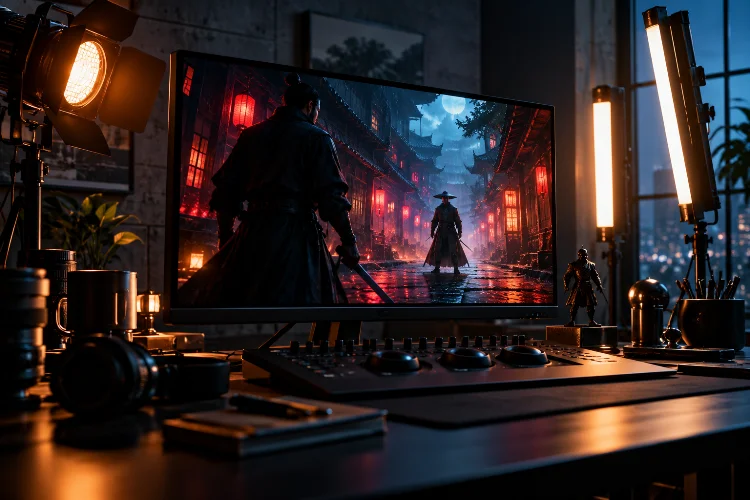
Ever watched a game cutscene that looked so cinematic you almost forgot you were playing a video game?
Maybe it was a dramatic confrontation under flickering neon lights, a quiet conversation during sunset, or a massive battlefield revealed through a perfectly timed camera movement.
Those memorable moments rarely happen by accident. Behind every impressive cinematic sequence is a carefully planned combination of lighting, composition, camera placement, and visual storytelling.
Understanding lighting and composition strategies for modern game cutscenes is essential for game developers, cinematic artists, animators, and anyone interested in creating visually compelling interactive experiences.
Modern game engines have made sophisticated cinematic tools more accessible than ever. Technologies such as real-time global illumination, physically based rendering, virtual cinematography, and advanced post-processing allow developers to create scenes that rival traditional animated films.
However, powerful technology alone doesn’t guarantee great visuals. Knowing where to position a light, how to frame a character, and when to introduce dramatic contrast is what makes cinematic storytelling effective.
This guide explores practical techniques for designing beautiful, emotionally engaging cutscenes while maintaining visual clarity, production efficiency, and a consistent artistic direction.
1. Understanding the Role of Lighting and Composition in Game Cinematics
Lighting and composition are more than decorative elements. They influence how players interpret emotions, understand environments, and follow important story developments.
A beautifully rendered scene can still feel confusing if the audience doesn’t know where to look.
Visual Storytelling Comes Before Technical Perfection
Imagine a cutscene where the main character discovers a hidden betrayal.
The environment might feature highly detailed materials, realistic reflections, and sophisticated particle effects. However, if the character’s facial expression is buried in darkness while the background dominates the frame, the emotional moment could disappear.
Effective cinematic direction establishes visual priorities.
Lighting determines which areas attract attention, while composition organizes those elements inside the frame. Together, they create a visual hierarchy that guides the viewer naturally through the action.
For example, a character standing alone inside an enormous hallway can communicate isolation without a single line of dialogue.
Why Game Cutscenes Are Different From Traditional Films
Traditional filmmakers usually work with a controlled viewing sequence. Game cinematics often need to function inside a dynamic environment that includes gameplay systems, player-controlled equipment, changing character appearances, and variable rendering conditions.
This creates additional technical challenges.
A lighting arrangement that works perfectly in one costume might produce distracting reflections on another. Similarly, a camera angle that looks excellent during development might reveal geometry problems when different animations play.
Successful game cinematography balances artistic control with the flexibility required by interactive systems.
2. Mastering Cinematic Lighting Techniques
One of the most effective ways to improve game cinematics is to borrow fundamental lighting principles from traditional filmmaking.
These principles remain useful whether you’re working with realistic characters, stylized fantasy environments, or animated storytelling.
Three-Point Lighting for Character-Focused Scenes
Three-point lighting is a classic technique built around three main light sources.
The key light provides the primary illumination and establishes the direction of the scene. The fill light controls shadow intensity, while the rim light, sometimes called a backlight, helps separate the subject from the background.
Consider a cinematic conversation inside a medieval castle.
A warm torch could serve as the key light, illuminating one side of a character’s face. A weaker ambient source might preserve important facial details, while a cool light from a nearby window creates seperation from the dark stone walls.
The result feels dimensional without requiring dozens of additional lights.
You don’t need to use all three sources in every shot. Sometimes removing the fill light creates stronger emotional tension than adding more illumination.
Motivated Lighting Makes Scenes Feel Believable
Motivated lighting means designing illumination around sources that plausibly exist within the environment.
Streetlights, candles, computer monitors, vehicle headlights, and sunlight entering through windows can all justify dramatic lighting choices.
For instance, a science-fiction cutscene might feature a character illuminated by the blue glow of a holographic display.
The hologram becomes both an environmental detail and a storytelling device. Its color could change when the character receives threatening information, creating a subtile emotional shift.
Artists can still introduce invisible cinematic lights to improve readability. The important thing is making the final result feel consistent with the environment.
Using Shadows to Build Drama
Shadows communicate uncertainty, danger, intimacy, and atmosphere.
Hard shadows create sharp boundaries and often work well in interrogation scenes, harsh daylight, or dramatic confrontations. Soft shadows produce smoother transitions that can feel more natural or emotionally comfortable.
The size and apparent shape of a light source influence shadow softness.
A small, concentrated source generally produces sharper shadows, while a larger area light creates broader transitions.
Instead of making every shadow realistic, consider what the scene needs emotionally.
3. Using Real-Time Global Illumination for Natural Environments
Modern game rendering has transformed how artists approach environmental lighting.
Previously, many production pipelines depended heavily on baked illumination. Although precomputed lighting remains useful, dynamic systems make it easier to respond to changing scenes.
Understanding Global Illumination
Global illumination simulates indirect light bouncing between surfaces.
Imagine sunlight entering a room through a large window. The light illuminates a wooden floor, and some of that energy reflects toward nearby walls and furniture.
Without indirect illumination, the room may look unnaturally dark outside areas directly reached by the sun.
Systems such as Unreal Engine’s Lumen simulate dynamic bounce lighting and reflections, allowing environmental changes to influence the visual appearance of a scene.
This becomes particularly useful when a cutscene includes moving doors, changing light sources, or characters traveling between contrasting environments.
Balancing Realism With Artistic Direction
Physically realistic lighting doesn’t automatically create the best cinematic image.
Suppose a character walks into a dark underground tunnel. A physically plausible setup might hide important facial details, especially when the character moves away from an existing light source.
A cinematic artist may introduce carefully controlled additional illumination to preserve the performance.
The objective isn’t to abandon realism. It’s to maintain believable lighting while protecting visual storytelling.
Real-time global illumination also has performance costs, depending on scene complexity, rendering settings, and hardware.
Use engine profiling tools to evaluate expensive reflections, shadow updates, and indirect-lighting behavior before committing to a demanding visual setup.
4. Applying Strong Composition Principles to Game Cutscenes
Composition determines how objects, characters, and environmental elements are arranged within the camera frame.
Great framing can make an ordinary conversation feel important, while weak framing can reduce the impact of an otherwise impressive scene.
The Rule of Thirds and Visual Balance
The rule of thirds divides the image into nine equal sections using two horizontal and two vertical guidelines.
Placing important subjects near the intersections can create a more natural visual balance than centering everything.
For example, during an emotional conversation, positioning a character near the left third of the frame leaves space on the right for environmental context or another character’s implied presence.
However, centered composition also has a purpose.
Perfect symmetry can suggest control, authority, ritual, or uneasiness. A villain seated in the exact center of an enormous throne room might appear more intimidating than one framed casually.
The best approach is to understand the rule before deliberately breaking it.
Leading Lines and Environmental Framing
Leading lines direct the viewer’s attention toward a focal point.
Roads, corridors, staircases, architectural beams, and even patterns of light can guide the eye toward an important character or object.
Imagine a cinematic sequence revealing an ancient temple.
A long stone pathway could lead visually toward the entrance, while towering pillars frame the structure on either side. A carefully positioned beam of sunlight might highlight the exact location where the player needs to focus.
These elements work together without requiring distracting camera movement.
Negative Space and Character Silhouettes
Negative space refers to the relatively empty area surrounding a subject.
Using it intentionally can communicate loneliness, uncertainty, or vulnerability. A small character surrounded by a vast, empty desert immediately suggests a different emotional atmosphere from a tightly framed close-up.
Silhouette clarity is equally important.
If a character’s outline blends into nearby objects, their actions can become difficult to understand.
Check important compositions in grayscale or with simplified lighting. If the subject remains easy to recognize, the visual hierarchy is probably working.
5. Choosing Camera Angles, Lenses, and Depth of Field
Lighting attracts attention, but camera placement determines the viewer’s relationship with the scene.
Even small adjustments in height, focal length, or subject distance can dramatically change how a moment feels.
Camera Angles Communicate Power
Low-angle shots often make characters appear dominant, imposing, or heroic.
High-angle shots can communicate vulnerability, uncertainty, or weakness. Eye-level framing generally creates a more neutral relationship between the viewer and the subject.
Picture a confrontation between a powerful commander and a frightened recruit.
Framing the commander from slightly below eye level could emphasize authority. Shooting the recruit from above might reinforce the imbalance between them.
These techniques become more effective when used selectively rather than repeated throughout every scene.
Focal Length Changes Visual Relationships
Wide-angle lenses exaggerate perspective and reveal more of the surrounding environment.
They work particularly well for establishing shots, dynamic movement, or sequences where spatial context matters.
Longer focal lengths provide a narrower field of view and compress the apparent distance between objects. They can also help isolate characters from visually complicated backgrounds.
In Unreal Engine, Cine Camera Actors provide filmback, lens, and focus settings that support familiar cinematography techniques.
Experimenting with different focal lengths while maintaining similar subject framing is an excellent way to understand how perspective influences emotion.
Depth of Field Should Support the Story
Depth of field controls how much of the scene appears acceptably sharp.
A shallow depth of field can isolate a character’s expression during an emotional moment. A deeper focus range may work better when the audience needs to understand several characters or environmental details simultaneously.
Overusing background blur, however, can hide important visual information.
Focus should guide attention rather than compensate for weak composition.
6. Creating Emotional Atmosphere Through Lighting and Color
Color and illumination shape how players emotionally interpret a cinematic sequence.
A location can feel welcoming, mysterious, threatening, or melancholic depending on its visual treatment.
Warm and Cool Lighting Contrasts
Warm colors, including amber, orange, and soft yellow, commonly suggest comfort, nostalgia, or intimacy.
Cool colors, such as blue and cyan, can communicate distance, tension, isolation, or technological environments.
These associations aren’t universal rules, but they offer useful starting points.
For example, a reunion scene might use gentle sunset lighting to emphasize emotional warmth. A tense encounter inside an abandoned research facility could combine cold overhead illumination with occasional red warning lights.
The strongest results often come from carefully balancing contrasting temperatures.
A warm face against a cooler background can create visual focus without increasing brightness dramatically.
Color Scripts Across Multiple Scenes
A color script is a planned progression of colors and lighting moods throughout a narrative sequence.
Instead of designing each shot independently, artists consider how the emotional atmosphere evolves over time.
Imagine a story beginning in a peaceful coastal village, progressing into an underground conflict, and ending with a hopeful sunrise.
The lighting could transition from warm natural tones to desaturated blue-gray environments before returning to brighter, more balanced colors.
This progression helps establish a consistant emotional identity across the cinematic experience.
Importantly, darker doesn’t always mean more dramatic. Sometimes a brightly illuminated environment can make an unsettling event feel even more disturbing.
7. Maintaining Visual Continuity Between Cinematic Shots
Beautiful individual frames don’t necessarily create a successful cinematic sequence.
Shots must also work together.
Sudden changes in lighting direction, exposure, camera geography, or character placement can make editing feel confusing.
Maintain Consistent Lighting Direction
Imagine two characters talking beside a window.
In the establishing shot, sunlight enters from the left. If the next close-up suddenly places the same sunlight on the opposite side without a believable camera or character change, the sequence may feel visually disconnected.
Create a simple lighting reference for important locations.
Document the dominant source direction, approximate color temperature, and environmental conditions so different shots maintain believable continuity.
Small shot-specific adjustments are perfectly acceptable, especially when improving facial readability.
Respect Screen Direction and Eyelines
The 180-degree rule helps preserve spatial relationships during conversations and action sequences.
By generally keeping cameras on one side of an established action axis, characters maintain understandable screen positions.
Crossing that axis isn’t forbidden, but it should be intentional and visually motivated.
Eyeline matching matters just as much.
If one character looks toward the upper-right portion of the frame, the following reverse shot should preserve a believable relationship between their gaze and the other character’s position.
Use Camera Movement With Purpose
A slow push-in can intensify emotion, while a tracking shot may reveal important environmental information.
Camera movement becomes distracting when it doesn’t contribute to storytelling.
In Unity, Cinemachine’s composition controls, including damping and screen-position settings, can help create responsive camera behavior.
The goal is controlled movement that feels motivated, rather than constant motion designed simply to make the scene look cinematic.
8. Building an Efficient Real-Time Cinematic Production Workflow
Advanced lighting and composition become much easier to manage when artists follow a structured production process.
Without planning, teams can spend hours refining visually impressive shots that eventually disappear during editing.
Start With Storyboards and Previsualization
Before adjusting complex lighting systems, define the sequence’s narrative purpose.
What information must the audience understand? Which emotional moment deserves the strongest visual emphasis? Where should the viewer look during each shot?
Simple storyboards can answer these questions early.
Next, build a rough previsualization using basic geometry, temporary characters, and simplified illumination.
This stage allows artists to evaluate pacing, camera placement, and spatial relationships without becoming distracted by environmental polish.
Establish Lighting Before Fine Detail
Once the main compositions work, introduce primary lighting sources.
Begin with broad environmental illumination and the dominant key light. Then add supporting sources only when they improve readability or reinforce the intended atmosphere.
In Unity’s High Definition Render Pipeline, physical light units provide a structured approach to lighting intensity and real-world scene scale.
In Unreal Engine, Sequencer can animate light properties, including intensity and color, making it useful for timed environmental changes during cinematics.
For particularly demanding shots, Unreal’s Lighting Channels can also help isolate direct lighting contributions to selected subjects.
These techniques provide more artistic flexibility while limiting unnecessary adjustments elsewhere in the scene.
Develop a Consistent Color-Grading Pipeline
Color grading should refine an established lighting design rather than repair fundamental exposure problems.
Start by balancing brightness, contrast, and white balance across related shots.
Then introduce creative adjustments that reinforce the story’s visual identity.
Unreal Engine provides post-processing controls for exposure, color grading, and filmic tone mapping. Comparable workflows are available through Unity’s rendering pipelines.
When possible, evaluate your cinematic sequence under the actual output settings intended for players.
A scene that looks excellent on an HDR development monitor may appear very different on a standard display.
Profile Performance and Test Real Gameplay Conditions
Real-time cinematics frequently involve expensive visual features, including volumetric fog, dynamic shadows, high-resolution reflections, and complex character materials.
Test these elements on representative target hardware.
Pay special attention to sudden camera cuts, fast illumination changes, transparency-heavy effects, and animated shadow-casting objects.
Performance problems may not appear until several demanding elements occur simultaneously.
It’s also worth testing different character outfits, aspect ratios, subtitle placements, and transitions between gameplay and cinematics.
A technically polished sequence should remain readable and visually coherent under the conditions players will actually experience.
9. Common Lighting and Composition Mistakes to Avoid
Even experienced cinematic artists can fall into habits that weaken visual storytelling.
One frequent problem is excessive illumination. Adding too many lights can flatten character features, reduce shadow depth, and make every object compete for attention.
Another common mistake is using dramatic camera angles without narrative motivation.
Extreme framing may look impressive in isolation, but repeating it throughout a conversation can distract from the characters’ performances.
Overly aggressive post-processing creates similar problems.
Strong bloom, exaggerated lens flares, excessive motion blur, and extreme color grading can overwhelm important visual details.
Artists should also avoid treating every frame as an independent illustration.
A composition that looks beautiful as a screenshot may become confusing when characters move, cameras transition, or the scene is edited together.
A useful final review is to watch the entire sequence without sound.
Ask whether character relationships, major actions, and emotional changes remain understandable through visuals alone.
If the answer is yes, the lighting and composition are likely contributing meaningfully to the storytelling rather than simply decorating the environment.
Creating memorable game cinematics requires more than powerful rendering technology or visually impressive environments.
The strongest sequences combine thoughtful lighting, purposeful composition, controlled camera movement, and consistent color design to support the story.
Techniques such as three-point lighting, motivated illumination, real-time global illumination, leading lines, depth of field, and cinematic color grading provide artists with practical tools for building engaging scenes.
Equally important are efficient workflows, performance testing, and visual continuity across different shots.
Ultimately, the best cinematic techniques aren’t always the most complicated. They’re the ones that make players feel something.
Ready to improve your next game cutscene? Start with a simple scene, experiment with one lighting technique and one composition principle, and evaluate how those changes influence the emotional impact of your storytelling.